
Katherine Schmidhofer Psychology

The keystone for psychological wellbeing.
Compassionate, inclusive, evidence-based psychology support for children and adults navigating life’s hardest moments.

Dr Katherine Schmidhofer
I am a psychologist with over 20 years clinical experience supporting children, adolescents and adults. I am dedicated to helping you navigate life’s challenges with genuine care and clarity. My work brings together evidence-based practice, deep compassion, and a practical understanding of how distress can show up differently across various stages of life. I support adults, parents, children and families, with a special focus on the emotional impact of cancer and the complexities of pregnancy and early parenthood.
I draw on therapies including Acceptance and Commitment Therapy (ACT), Cognitive Behavioural Therapy (CBT), Dialectical Behaviour Therapy (DBT), Eye Movement Desensitisation and Reprocessing (EMDR), Mindfulness, and Circle of Security-informed parenting work.
My approach is warm, calm, collaborative and tailored to the individual client. I am committed to my own ongoing professional development to ensure that therapies offered are based on current research and best-practice guidelines.
People often come to therapy at times when life feels especially hard to hold. My aim is to offer a space that feels safe, thoughtful and grounded — a place where people can feel understood, supported, and better equipped to move forward.
Qualifications
PhD (Behavioural Sciences in Medicine, University of Sydney)
Postgraduate Diploma in Psychology
Bachelor of Arts (Psychology)

Professional Memberships
Fully registered member of the Psychology Board of Australia (PBA) and the Australian Health Practitioners Regulation Agency (AHPRA)
Full Member of the Australian Psychological Society (APS)

Services
Therapy offers a space to process what is happening, understand patterns, strengthen coping, and find steadiness during uncertain times.
My work is grounded in evidence-based therapies and adapted to the needs of each individual. I draw on a range of approaches depending on the presenting concerns, goals, and context of therapy.
These include:
- Cognitive Behaviour Therapy (CBT) to help identify and shift unhelpful thought and behaviour patterns.
- Acceptance and Commitment Therapy (ACT) to build psychological flexibility and help people respond more effectively to difficult thoughts and feelings.
- Dialectical Behaviour Therapy (DBT) to support emotion regulation, distress tolerance, and interpersonal effectiveness.
- Mindfulness-based approaches to strengthen awareness, grounding, and emotional regulation.
- EMDR for trauma processing and recovery.
- Circle of Security-informed parenting support to strengthen attachment, emotional safety, and parent-child connection.
My aim is always to provide therapy that is not only evidence-based, but also thoughtful, compassionate and genuinely helpful in the real world.
Anxiety and Depression

Anxiety and Depression
Utilising effective techniques to manage anxiety and depression. I am committed to working closely with you and aiming for meaningful, lasting improvements in your wellbeing.
Oncology Support

Cancer affects far more than the body. It can bring fear, uncertainty, grief, changes in identity, relationship strain, and deep emotional exhaustion. It also affects the people around the person diagnosed — partners, children, and the wider family.
I provide psychological support for:
- individuals adjusting to a cancer diagnosis
- people moving through treatment, recovery, recurrence, or survivorship
- parents trying to support children while managing their own illness
- partners and family members affected by the emotional impact of cancer
- children experiencing worry, confusion, behavioural changes, or distress when a loved one is unwell
- grief, anticipatory grief, and ongoing family stress related to illness
This work may include support with anxiety, low mood, trauma responses, uncertainty, body image changes, coping with treatment, communication within the family, and helping children feel informed, safe, and supported.
Combining lived experience and clinical expertise, my approach is compassionate, practical, and deeply respectful of the realities families face when cancer enters their lives.
Oncology Support
Perinatal Psychology

Perinatal Psychology
The perinatal period can be one of the most meaningful times in life, but it can also be one of the most emotionally complex. Pregnancy, birth and early parenthood can bring anxiety, overwhelm, grief, identity shifts, relationship stress, and unexpected emotional challenges.
I support clients experiencing:
- anxiety during pregnancy
- birth-related distress or trauma
- postnatal anxiety or depression
- adjustment to parenthood
- overwhelm, guilt, or self-criticism
- fertility-related emotional distress
- pregnancy loss
- the strain that parenthood can place on relationships and emotional wellbeing
In addition to private practice, I have consulted at the Gidget Foundation for over seven years, supporting mothers and fathers during the perinatal period. Therapy in this space is warm, respectful and non-judgemental, with support tailored to the emotional realities of pregnancy, postpartum life, and early parenting.
Child and Adolescent Support

Child and Adolescent Support
Children often show us they are struggling through behaviour, emotions, sleep difficulties, withdrawal, clinginess, or changes in confidence. Parents may also feel unsure how best to respond, especially when the family is already under stress. I bring a deep understanding of child development and neurodiversity, with extensive experience tailoring support services to meet the unique needs of individual clients.
I support:
- children and adolescents experiencing anxiety, emotional distress, or adjustment difficulties
- parents seeking guidance and practical strategies
- families navigating illness, grief, separation, or major transitions
- children affected by a parent’s cancer or other serious illness
My goal is to help kids feel safer and more understood, while supporting parents with clear, compassionate guidance.
Adult Support

Adult Support
I work with adults navigating:
- anxiety
- depression
- grief and loss
- illness-related stress
- trauma
- self-esteem
- caregiving stress
- major life transitions
Anxiety and Depression
Utilising effective techniques to manage anxiety and depression. I am committed to working closely with you and aiming for meaningful, lasting improvements in your wellbeing.
Oncology Support
Cancer affects far more than the body. It can bring fear, uncertainty, grief, changes in identity, relationship strain, and deep emotional exhaustion. It also affects the people around the person diagnosed — partners, children, and the wider family.
I provide psychological support for:
- individuals adjusting to a cancer diagnosis
- people moving through treatment, recovery, recurrence, or survivorship
- parents trying to support children while managing their own illness
- partners and family members affected by the emotional impact of cancer
- children experiencing worry, confusion, behavioural changes, or distress when a loved one is unwell
- grief, anticipatory grief, and ongoing family stress related to illness
This work may include support with anxiety, low mood, trauma responses, uncertainty, body image changes, coping with treatment, communication within the family, and helping children feel informed, safe, and supported.
Combining lived experience and clinical expertise, my approach is compassionate, practical, and deeply respectful of the realities families face when cancer enters their lives.
Perinatal Psychology
The perinatal period can be one of the most meaningful times in life, but it can also be one of the most emotionally complex. Pregnancy, birth and early parenthood can bring anxiety, overwhelm, grief, identity shifts, relationship stress, and unexpected emotional challenges.
I support clients experiencing:
- anxiety during pregnancy
- birth-related distress or trauma
- postnatal anxiety or depression
- adjustment to parenthood
- overwhelm, guilt, or self-criticism
- fertility-related emotional distress
- pregnancy loss
- the strain that parenthood can place on relationships and emotional wellbeing
In addition to private practice, I have consulted at the Gidget Foundation for over seven years, supporting mothers and fathers during the perinatal period. Therapy in this space is warm, respectful and non-judgemental, with support tailored to the emotional realities of pregnancy, postpartum life, and early parenting.
Child and Adolescent Support
Children often show us they are struggling through behaviour, emotions, sleep difficulties, withdrawal, clinginess, or changes in confidence. Parents may also feel unsure how best to respond, especially when the family is already under stress. I bring a deep understanding of child development and neurodiversity, with extensive experience tailoring support services to meet the unique needs of individual clients.
I support:
- children and adolescents experiencing anxiety, emotional distress, or adjustment difficulties
- parents seeking guidance and practical strategies
- families navigating illness, grief, separation, or major transitions
- children affected by a parent’s cancer or other serious illness
My goal is to help kids feel safer and more understood, while supporting parents with clear, compassionate guidance.
Adult Support
I work with adults navigating:
- anxiety
- depression
- grief and loss
- illness-related stress
- trauma
- self-esteem
- caregiving stress
- major life transitions
Resources
Katherine Schmidhofer Psychology is not able to provide crisis support. If you are in need of immediate assistance and there is threat to life, call 000 for urgent response. For crisis support, please contact the services below.
NSW Mental Health Line
Kids Help Line
Lifeline
Lifeline Text
Beyond Blue
Cancer resource for families
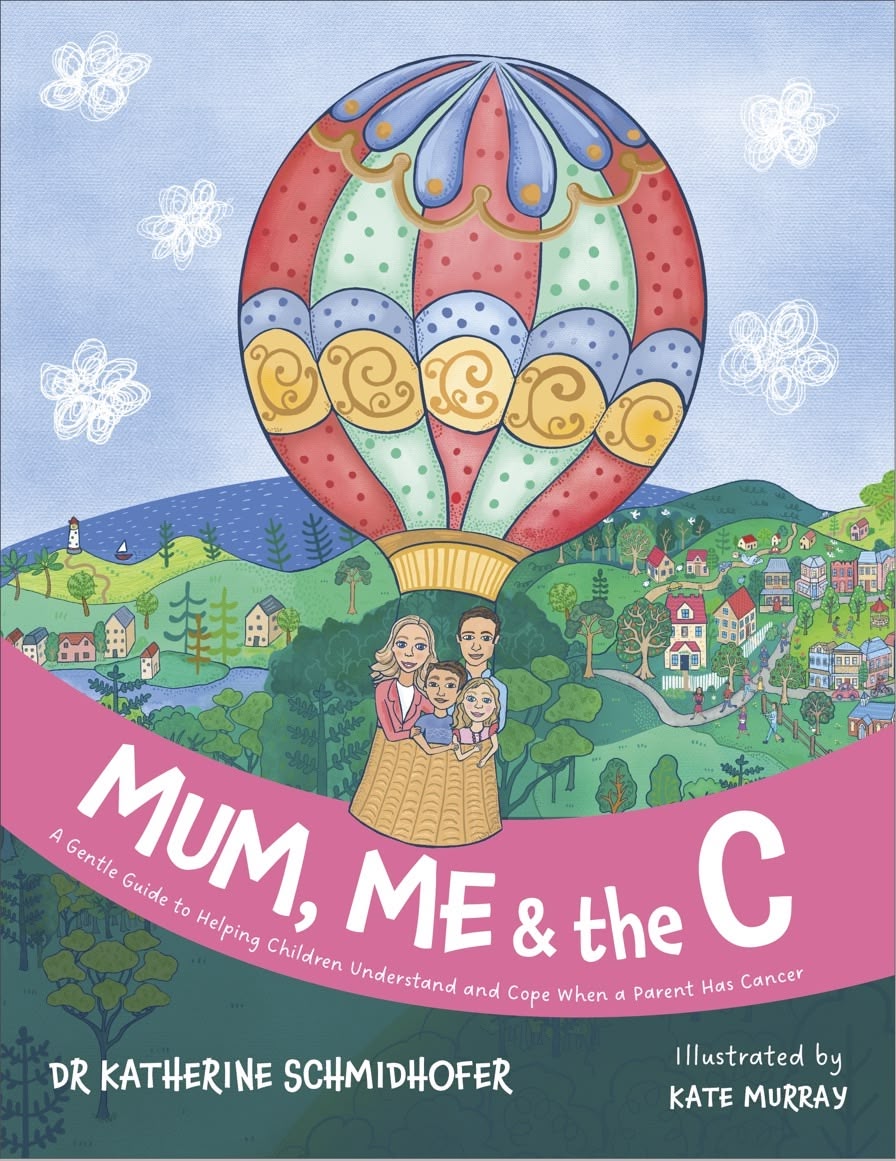
Mum, Me & the C
A Gentle Guide to Helping Children Understand and Cope When a Parent Has Cancer

Cancellation Policy
To provide the best care, I ask that you provide at least 48 hours notice for cancellations. This allows me to offer that time slot to another client who may be in need of support. Late cancellations and no-shows will be charged full fee (except in the event of illness or accident). Thank you for your understanding and for valuing our work together.
Fees & Rebates
Appointments are offered in person or via telehealth for accessibility and convenience. You can book an appointment directly without a GP referral, though a Mental Health Treatment Plan is required if you wish to claim Medicare rebates.
Fees for a standard appointment (50 minutes) are $300. Fees are payable at the end of the session via online processing.
Medicare Rebates
If you have a current Mental Health Treatment Plan from your GP, you will be able to access a Medicare rebate for eligible psychology sessions.
If you have reached your Medicare Safety Net threshold, you will be eligible for a higher rebate, significantly reducing your out-of-pocket costs
Please note:
- a referral and Mental Health Treatment Plan are required before your appointment if you wish to claim a rebate
- Medicare rebates are processed after payment of the full session fee
- the rebate amount and number of eligible sessions are determined by Medicare (i.e. you may be eligible for up to 10 sessions per calendar year)
Private health insurance
If you have extras cover for psychology, you may be eligible to claim through your private health fund, depending on your policy.
Frequently Asked Questions
Do I need a referral to see a psychologist in Australia?
No, you do not need a referral to see a psychologist privately.
However, if you would like to claim a Medicare rebate, you will need a referral and a Mental Health Treatment Plan from a GP, psychiatrist or paediatrician.
How do I get a Mental Health Treatment Plan?
You can book a longer appointment with your GP and ask for a Mental Health Treatment Plan (MHTP).
Your GP will:
- discuss your concerns
- assess your mental health
- create a plan and referral
This allows access to Medicare rebates for psychology sessions.
How many psychology sessions does Medicare cover?
Under Medicare, eligible clients can access:
- up to 10 individual sessions per calendar year
- plus up to 10 group sessions
Your GP will usually refer you for an initial 6 sessions, with further sessions available after review.
How much does a psychologist cost in Australia?
Fees vary depending on the psychologist and location. The Australian Psychological Society (APS) recommends a fee of $318 for a standard consultation. This practice charges $300 per consultation, which is below the recommended fee.
With Medicare:
- you receive a rebate after paying the full session fee
Without Medicare:
- you pay the full session fee privately
Can I claim psychology sessions through private health insurance?
Yes, if your policy includes extras cover for psychology, you may be able to claim part of the cost.
However:
- you cannot claim both Medicare and private health for the same session
- you will need to choose one option
What happens in the first psychology session?
The first session is focused on understanding you and your situation.
This may include:
- what has brought you to therapy
- your current challenges
- your goals
- relevant background information
There is no pressure to share everything immediately — the pace is guided by you.
How do I know if I need a psychologist?
You don’t need to wait until things feel severe.
Many people seek support for:
- anxiety or overwhelm
- parenting challenges
- stress or burnout
- illness or health-related concerns
- grief or major life transitions
If something feels difficult to manage on your own, therapy can help.
Are appointments confidential?
Yes. Psychology sessions are confidential and private.
There are a few legal exceptions (e.g., risk of harm or subpoena), but these will always be explained clearly.
Your information cannot be shared without your consent.
Do you offer telehealth appointments?
Yes. Telehealth (video sessions) are available and can be a flexible option.
Telehealth is:
- private and secure
- accessible from home
- eligible for Medicare rebates
How do I talk to my child about cancer or serious illness?
This is one of the most common concerns for families.
Children often sense when something is wrong, even if they are not told directly. Honest, age-appropriate communication helps children feel:
- safer
- less confused
- more included
Support can help parents find the right words and approach for their child’s age and needs.
Can therapy help children when a parent has cancer?
Yes. Children can be deeply affected by a parent’s illness, even if they don’t express it directly.
Therapy can help children:
- understand what is happening
- express feelings safely
- reduce anxiety and behavioural changes
- feel more secure and supported
What support is available for families going through cancer?
Support can include:
- individual therapy for the patient
- support for partners
- guidance for parents
- therapy for children
- family sessions
Psychological support helps families navigate both the emotional and practical challenges of illness.
What is perinatal psychology?
Perinatal psychology focuses on mental health during:
- pregnancy
- birth
- postnatal period
It supports emotional wellbeing during a time that can be both meaningful and overwhelming.
Can I see a psychologist during pregnancy?
Yes. Many people seek support during pregnancy for:
- anxiety
- birth-related fears
- past trauma
- emotional overwhelm
Psychological support during pregnancy is safe and can be very beneficial.
What is perinatal depression and anxiety?
Perinatal depression and anxiety can occur during pregnancy and/or in the weeks and months after childbirth. This may include:
- persistent low mood
- excessive worry
- irritability or overwhelm
- difficulty bonding or feeling like yourself
Support is available and effective.
Can partners also receive support during the perinatal period?
Yes. Partners can experience significant emotional stress during pregnancy and early parenthood.
Support can help with:
- adjustment
- relationship strain
- emotional wellbeing
What if I’m not sure therapy is right for me?
It’s completely normal to feel unsure.
You are welcome to:
- book an initial session
- ask questions
- take time to decide
What is your cancellation policy?
If you need to cancel or reschedule, please provide at least 48 hours’ notice.
Late cancellations or missed appointments may incur a fee.
- 02 9070 1200
-
North Shore Health Hub, Tower A, Level 2
Suite 203/7 Westbourne St St Leonards NSW 2065
We acknowledge the Traditional Custodians of the land on which we live and work, and we pay our respects to Elders past and present. We extend that respect to all Aboriginal and Torres Strait Islander peoples today.